Nantucket architecture as a lens for choosing your inn
Nantucket architecture is not a backdrop; it is the main character shaping every stay on this island. When you book a house-style inn or a larger property in town, you are stepping into a living gallery of historic buildings shaped by the whaling industry and decades of preservation work. On Nantucket Island you will find that each building, from a cedar-shingled guest house to a Greek Revival mansion, tells a precise story in wood, brick, and stone.
The island grew wealthy on the whaling industry, and that prosperity still reads clearly in the architecture along Main Street and in the wider historic district. Federal façades, Greek Revival porticos, and the occasional brick building erected after the Great Fire line the street, while smaller houses with a central chimney and simple roof forms cluster closer to the sea. This dense fabric of historic streetscapes means that when you compare properties, you are really comparing layers of Nantucket maritime history and New England design thinking.
For travellers choosing where to sleep, understanding this architecture turns a simple booking into a curated experience. A guest room in a former sea captain’s house on Nantucket Island feels different from a converted warehouse-style building near the harbour, even if both overlook the water. Once you start reading the roof lines, the clapboard or shingle siding, and the way each property sits within the local historic district, you will find it easier to match your expectations for comfort with the specific Nantucket style that speaks to you.
From whaling wealth to preserved streetscapes
The town of Nantucket began as a modest settlement, but the rise of the whaling industry transformed both its economy and its architecture. Wealthy whalers and sea captains commissioned refined houses in the latest style from England and coastal New England, layering Federal symmetry and Greek Revival details over earlier Colonial forms. Walking today through the Nantucket Historic District, you move through this timeline in a few hundred metres.
On Upper Main Street, large houses with balanced façades, scroll-top doorways, and granite steps signal the height of whaling prosperity. Many of these properties retain a central chimney or paired chimneys, while their roof profiles and classical trim reflect a confident Greek Revival design language. Closer to the harbour and the sea, smaller buildings show how vernacular Nantucket architecture adapted to salt air, strong winds, and the practical needs of a working island community.
The Great Fire in the mid-nineteenth century led to a wave of brick buildings in the commercial core, and several of these now host inns that blend historic preservation with contemporary comfort. When you book a room in one of these structures, you are choosing thick masonry walls, tall windows, and a street presence shaped by nineteenth-century fire codes rather than modern speculation. This is why the Nantucket Historic District Commission regulates exterior changes so closely: the goal is to keep the town’s buildings reading as a coherent historic district while allowing interiors to evolve for today’s travellers.
Reading a typical Nantucket house when you book
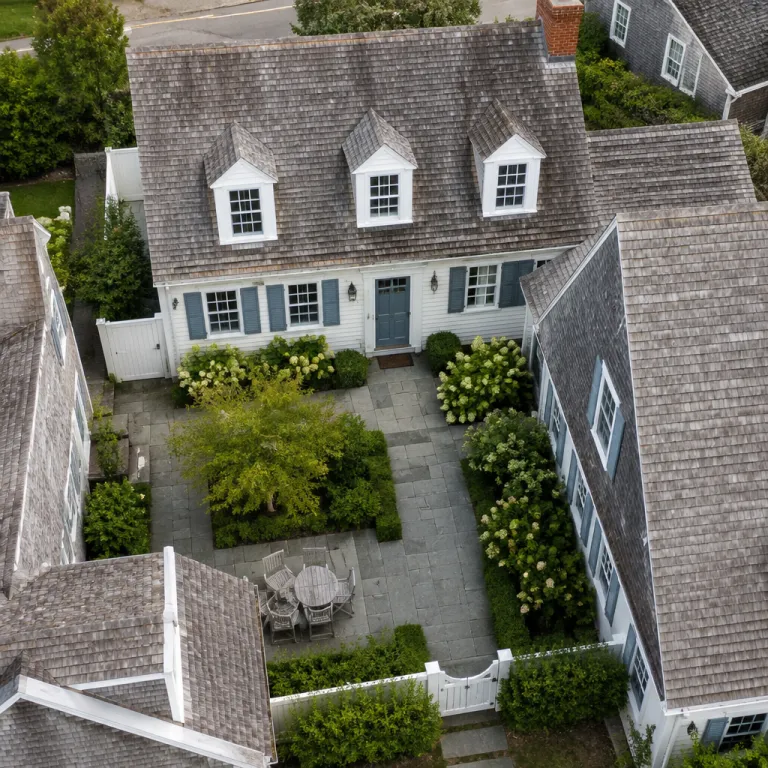
Before you reserve a room, it helps to recognise what defines a typical Nantucket house in both singular and plural forms. The classic example is a four-bay façade with a central chimney, shingle or clapboard siding, and restrained trim that reflects the island’s Quaker roots. Many historic buildings that now operate as inns still follow this Nantucket style template, even when interiors have been reconfigured for guest comfort.
Look closely at the roof: a simple gable or lean-to profile often signals an earlier building, while more elaborate Greek Revival cornices and scroll-top door surrounds point to the whaling era. Some properties near Brant Point and the sea show a Cape Cod influence, with low, compact massing designed to shed wind and salt spray. Inside these houses, you may find low ceilings, central chimney stacks, and slightly irregular room shapes that speak to centuries of adaptation rather than new-build efficiency.
When you compare properties online, pay attention to how owners describe exterior changes and preservation work. Inns that sit within the Nantucket Historic District or other local historic districts must follow district commission guidelines on materials, roof forms, and façade design, which helps maintain the character of the street. If you have questions, use the listed phone, email, or contact form rather than any generic “email protected” placeholder, and ask directly how the building’s historic architecture shapes room layouts, window sizes, and sea views.
Historic New England inn makeovers for modern travellers
Across Nantucket Island, historic New England inns are undergoing careful makeovers that respect preservation rules while elevating guest comfort. Owners work with local craftsmen and the Nantucket Historic District Commission to ensure that any exterior changes to buildings in the town or near Brant Point remain faithful to established Nantucket architecture. Inside, however, you will find thoughtful design interventions that open up former parlours, repurpose service wings, and reinterpret central chimney masses as sculptural features.
Many properties in the historic district now use their architecture as a core part of the guest experience, rather than a constraint. A narrow stair in a former whaling captain’s house becomes a narrative device, leading you past framed charts of Nantucket maritime routes and archival images of the whaling industry. Low eaves under a weathered roof turn into intimate attic suites, where carefully placed skylights frame the sea and the town’s roofscape without disturbing the historic exterior.
Some of the most successful makeovers pair period-correct materials outside with contemporary design inside, creating a dialogue between past and present. For example, a shingled house near Main Street might retain its original façade within the local historic district, while its interior bar or lounge adopts a lighter, more coastal palette. A notable case is the reimagined Greydon House, where the Green Room cocktail lounge shows how a historic building can host a year-round social space; you can read more about this approach to Nantucket style hospitality in this detailed feature on Nantucket inn design.
Choosing your location by district, street, and sea light
Location on Nantucket Island shapes not only views but also the type of architecture surrounding your stay. Inns in the core Nantucket Historic District cluster around Main Street and nearby lanes, where you will find a dense concentration of historic buildings in Federal and Greek Revival style. Here, the street grid, roof lines, and consistent shingle colours create a cohesive townscape that feels almost cinematic in the soft sea light.
Staying closer to Brant Point places you in a slightly more open setting, where houses and properties often show a Cape Cod influence and a stronger connection to the sea. These buildings may be newer than those on Main Street, yet many still follow Nantucket style guidelines on massing, roof pitch, and exterior materials set by the district commission or other local historic bodies. Guests who prioritise quick access to the beach and harbour often prefer this area, accepting a little less architectural density in exchange for more immediate maritime atmosphere.
Further out, in neighbourhoods that sit just beyond the strictest historic districts, you will find a mix of older houses and more recent design experiments. Some properties here reinterpret traditional Nantucket architecture with larger windows, more open plans, and subtle contemporary detailing, while still nodding to the island’s whaling and Nantucket maritime heritage. When you evaluate options, consider how much you value being immersed in the most intact historic district fabric versus enjoying a slightly quieter street with easier parking and perhaps more generous room sizes.
Practical tips for evaluating historic properties before you book
Evaluating a historic property on Nantucket requires a slightly different mindset from booking a standard hotel on the mainland. Start by reading the description for clues about the building’s age, style, and position within the town or a named historic district, then cross-reference photos to see how faithfully the exterior reflects classic Nantucket architecture. Look for signs of a central chimney, original roof forms, and traditional materials, because these often indicate a more immersive sense of place.
Next, consider how recent renovations balance preservation with comfort, especially if you are travelling during the busy Nantucket season when occupancy is high. Properties that highlight their work with local historic consultants or the district commission usually take both safety and authenticity seriously, which matters in older buildings with thick walls and compact staircases. Ask directly via phone, email, or contact form about soundproofing, window upgrades, and climate control, since these elements can vary widely between a small house conversion and a larger multi-wing building.
Finally, pay attention to how each property frames its relationship with the sea, the island’s whaling past, and broader New England design traditions. Some inns lean heavily into Nantucket maritime themes, with ship models and whaling charts, while others emphasise a quieter Cape Cod coastal mood or a more urban Main Street sensibility. If a website uses placeholders such as “email protected” instead of clear contact details, take that as a cue to look for more transparent communication elsewhere, because clarity in small things often mirrors the care invested in both preservation and guest experience.
Key figures that shape Nantucket’s built heritage
- The National Historic Landmark District on Nantucket encompasses a large portion of the island, making it one of the more extensive protected historic districts in the United States according to SAH Archipedia and related surveys.
- Upper Main Street’s grand houses largely date from the building boom of the early nineteenth century, when whaling wealth funded many of the Federal and Greek Revival façades that now host inns and guest houses.
- After the decline of the whaling industry in the mid-nineteenth century, the island’s population fell significantly, a contraction that inadvertently helped freeze much of the existing architecture in place.
- Typical Nantucket houses often feature four-bay façades and a central chimney, with cedar shingles that weather to a silver-grey tone prized by both preservationists and travellers seeking an authentic New England atmosphere.
- Strict limits on exterior changes in the core historic districts have helped maintain a remarkably consistent streetscape, which in turn underpins the island’s tourism economy and the appeal of its historic inns.
FAQ about Nantucket architecture and historic inns
What defines a typical Nantucket house used as an inn?
Many inn conversions occupy traditional four-bay houses with a central chimney, shingle or clapboard siding, and modest trim that reflects early Quaker and Colonial influences. These buildings often sit close to the street, with compact footprints and simple roof lines that have weathered decades of sea air. Inside, rooms may be smaller than in modern construction, but careful renovations can turn this intimacy into a strength.
Which architectural styles will I see most when staying in town?
Guests in the Nantucket Historic District will encounter a mix of Federal, Greek Revival, Georgian, and later Victorian vernacular styles. Federal and Greek Revival façades dominate Upper Main Street, where former whaling captains’ houses now host elegant inns. Closer to the harbour and Brant Point, you will see more modest Cape Cod forms and shingled cottages adapted for hospitality.
Why are cedar shingles so common on Nantucket inns?
Cedar shingles are widely used because they resist harsh maritime weather, are relatively light, and age to a silver-grey colour that has become synonymous with Nantucket style. Many historic buildings and newer properties alike rely on this material to blend into the island’s visual rhythm. For travellers, the result is a cohesive streetscape where even recently renovated inns feel rooted in local tradition.
How does the Nantucket Historic District Commission affect my stay?
The Nantucket Historic District Commission oversees exterior changes to buildings within designated historic districts, including many inns and guest houses. Its guidelines control materials, roof forms, window proportions, and other visible elements, ensuring that renovations respect the town’s architectural heritage. While interiors remain more flexible, this oversight helps guarantee that the streets and façades you experience retain their historic character.
Are historic inns less comfortable than newer hotels on the mainland?
Comfort levels vary, but many historic Nantucket properties have invested heavily in sensitive upgrades that improve insulation, climate control, and soundproofing without compromising preservation. Rooms may be more individual in shape and size than in a standardised hotel, yet this uniqueness often enhances the sense of place. When in doubt, ask directly by phone or email about recent renovations and specific amenities before you book.